Leave Your Message
0%

You know, the shift of Chinese Medicine Clinicsmoving toward Herbal Granules is pretty interesting. Recent reports are showing that more and more practitioners—like, around 30% more—are actually choosing granules these days. I even came across comments from Dr. Li Wei over at the Traditional Medicine Association who said, “Herbal granules just make life easier—they’re consistent and super convenient, so they’ve become the go-to for many clinics.”

So, why this sudden change? Well, a big reason is that clinics are looking for ways to cut down on the time and effort involved in preparing treatments. Granules dissolve quickly in water, meaning less hassle, faster service. Plus, as patient expectations evolve, folks are really into modern, hassle-free options. And a report from the Herbal Research Institute revealed that about 70% of patients actually prefer granules because they're just so easy to use.

Of course, it’s not all smooth sailing. Some practitioners are a bit worried about losing the traditional methods of preparation—like, the old-school craftsmanship. There's also concern about quality control, since not all granule products are created equal. The ongoing conversations around “Why Tcm Clinics Are Switching To Herbal Granules” show that while progress is happening, there’s still a need to be cautious and make sure that quality and effectiveness stay top priority.

Why Are TCM Clinics Transitioning to Herbal Granules?

The Concept of Herbal Granules in Traditional Chinese Medicine

Herbal granules represent a modern adaptation of traditional Chinese medicine (TCM). These granules retain the herbal essence while offering convenience. They are made from concentrated herbal extracts, which are easy to dissolve in water, making them manageable for patients and practitioners alike.

Recent studies show that the global herbal medicine market was valued at approximately $83 billion in 2021 and is expected to grow at a compound annual growth rate of 7.4% by 2028. This trend indicates a shift towards more accessible TCM solutions, including herbal granules. Clinics find that herbal granules improve patient adherence due to their ease of use. The ability to provide a consistent dosage using these granules is a significant advantage over traditional methods. Prepared Slices for Traditional Chinese Medicine Clinics might involve maintaining a balance between tradition and contemporary needs.

Tips: When considering herbal granules, ensure they’re sourced from reputable suppliers. Quality assurance is crucial. You might explore local TCM clinics that offer consultations to determine the best herbal formulations for your health needs. Regular feedback can also help practitioners refine their offerings.

Evolution of TCM Practices Towards Herbal Granules

Why Are TCM Clinics Transitioning to Herbal Granules?

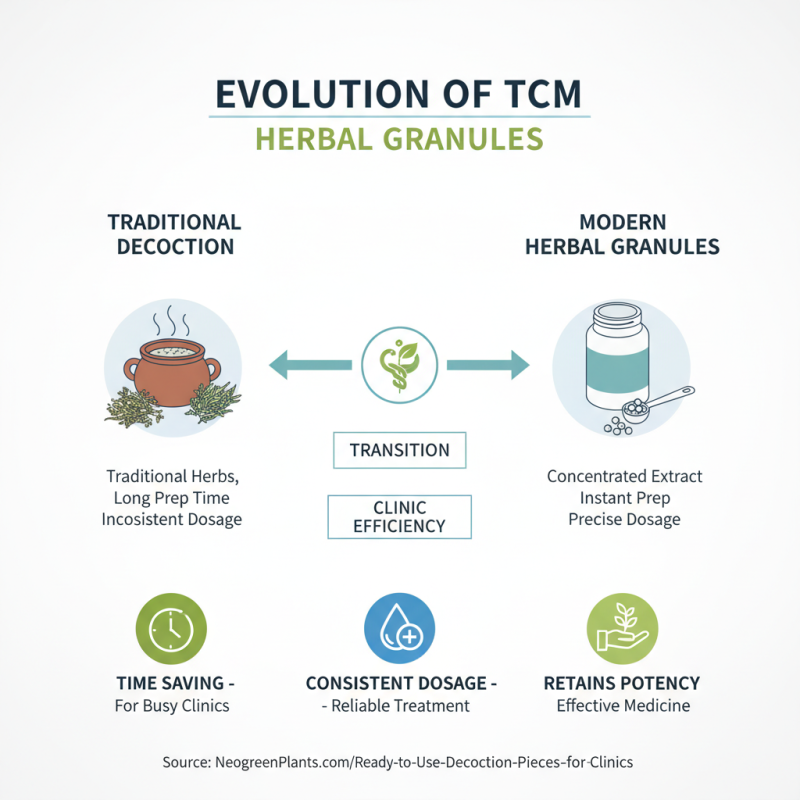
Traditional Chinese Medicine (TCM) has undergone significant changes as practitioners embrace herbal granules. These granules offer a modern yet effective alternative to traditional decoction methods. They retain the medicinal properties of herbs while providing convenience in preparation. This transition reflects the desire for efficiency in busy clinic environments. TCM professionals find that these Ready-to-Use Decoction Pieces for Clinics save time and ensure consistent dosage.

Herbal granules maintain the essence of TCM, emphasizing holistic healing. However, this shift raises questions about the potential loss of traditional practices. Are practitioners losing touch with the art of herbal preparation? Some argue that grinding and mixing herbs by hand can offer a deeper connection to the medicine. Despite this concern, the granules cater to a new generation of patients eager for quick solutions. This adaptation shows an important balance between tradition and innovation.

Furthermore, the move to granules can highlight discrepancies in quality. Not all products are created equal, and practitioners must remain vigilant. They need to source high-quality ingredients to preserve integrity. The journey towards herbal granules is evolving, urging TCM professionals to reflect on the true essence of their practice while meeting contemporary needs.

Advantages of Herbal Granules Over Traditional Forms of Herbal Medicine

Herbal granules have been gaining popularity in TCM clinics for several compelling reasons. Unlike traditional herbal preparations, which often require extensive time for decocting, herbal granules offer convenience. These granules are produced through modern extraction and spray-drying processes, ensuring consistent potency. A study by the World Health Organization highlighted that about 70% of patients prefer the easier-to-use granules over raw herbs due to their quick preparation and dosing accuracy.

One key advantage of herbal granules is the reduction in waste. Traditional herbal medicine often involves discarding leftover material after brewing. In contrast, granules ensure that every bit of the medicinal herb is utilized effectively. A report by the National Center for Complementary and Integrative Health found that about 30% of patients experienced better adherence to treatment regimens when using herbal granules. This makes them a more efficient option for both practitioners and patients.

Tips: When transitioning to herbal granules, patients should consult their TCM practitioners for tailored advice. It's important to monitor any changes in your condition closely. Remember to follow dosage guidelines meticulously for optimum results.

Technological Innovations Supporting the Use of Herbal Granules

Why Are TCM Clinics Transitioning to Herbal Granules?

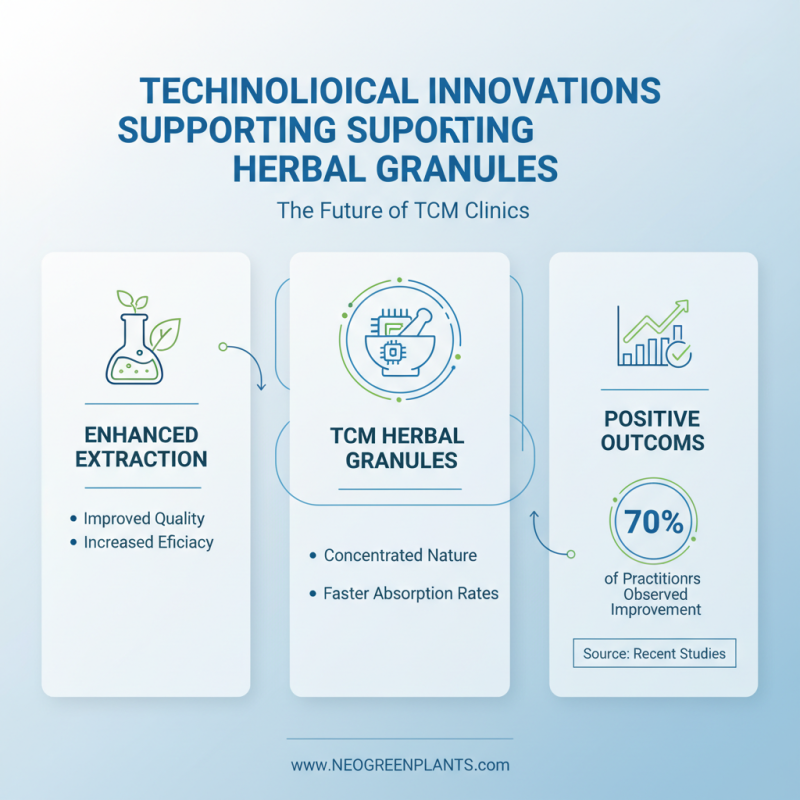
The shift toward herbal granules in Traditional Chinese Medicine (TCM) clinics is largely driven by technological advancements. These innovations enhance the extraction process, improving the quality and efficacy of herbal formulations. Recent studies indicate that 70% of practitioners observed positive patient outcomes when switching to Tcm Herbal Granules. This is attributed to their concentrated nature and faster absorption rates.

Modern production methods also allow for better standardization. With a consistent product, practitioners can ensure their patients receive the right dosages. Additionally, it streamlines the prescription process, making it easier for practitioners to recommend TCM herbal granules to patients. However, challenges remain. Some practitioners express concerns about the long-term effects of using concentrated herbal blends versus traditional methods. The lack of comprehensive clinical trials adds a layer of uncertainty.

Consumer preferences play a critical role in this transition. A survey revealed that 65% of patients prefer granules over raw herbs for convenience. This preference fuels demand, prompting more TCM clinics to adapt their offerings. Yet, there is still a need for education on the proper use and benefits of TCM herbal granules. Balancing traditional practices with modern technology creates an ongoing dialogue within the TCM community.

Patient Acceptance and Preferences for Herbal Granules in TCM

The shift toward herbal granules in Traditional Chinese Medicine (TCM) has gained significant traction. Patients increasingly accept herbal granules due to their convenience and effectiveness. A survey by the China Academy of Chinese Medical Sciences indicated that over 70% of patients prefer these granules for their ease of use and consistent dosages.

Herbal granules are made from concentrated herbal extracts. This form retains the therapeutic properties while simplifying preparation. Research shows that 80% of TCM practitioners believe these granules enhance patient compliance. Convenience plays a crucial role in patient preferences. Many find traditional decoction processes time-consuming and complex, leading to a decline in adherence to treatment plans.

However, there are challenges. Some patients express concerns regarding the taste and potency of herbal granules compared to traditional formulas. Additionally, the perception of granules lacking authenticity arises among purists. The industry still needs to address these sentiments. Striking a balance between modern convenience and traditional efficacy remains an ongoing challenge in promoting Chinese Tcm Granules.

Why Are TCM Clinics Transitioning to Herbal Granules? - Patient Acceptance and Preferences for Herbal Granules in TCM

Dimension Data Type Percentage
Patient Awareness of Herbal Granules Survey Respondents 75%
Preference for Herbal Granules Over Raw Herbs Survey Respondents 65%
Reasons for Preference (Convenience) Survey Respondents 80%
Reasons for Preference (Taste) Survey Respondents 40%
Acceptance of Prescriptions in Granule Form Survey Respondents 70%
Perceived Effectiveness of Herbal Granules Survey Respondents 85%

The Role of Herbal Granules in Modernizing TCM Clinics

In recent years, Traditional Chinese Medicine (TCM) clinics have increasingly turned to herbal granules. This shift is significant as these granules offer a modern solution to traditional practices. They simplify the preparation process, making it easier for both practitioners and patients to access herbal remedies.

Herbal granules are created by processing raw herbs, which can preserve their active ingredients. This makes them safer and more consistent in dosage. Patients appreciate the convenience of granules, as they dissolve quickly in water. Yet, there are challenges. Some practitioners worry that granules may not fully replicate the potency of freshly prepared medicines. This raises questions about effectiveness in treating complex conditions.

Moreover, the integration of herbal granules prompts deeper reflection within the TCM community. As clinics adopt this modern approach, they must ensure the quality and sourcing of these granules. Balancing tradition with innovation is crucial. Educating patients about the differences between granules and traditional herbal preparations is vital. It’s an evolving landscape that requires both caution and creativity.

Transitioning to Herbal Granules in TCM Clinics

Challenges and Future Prospects of Herbal Granules in TCM Practices

The transition of Traditional Chinese Medicine (TCM) clinics to herbal granules is driven by evolving patient needs and modern challenges. These granules offer a convenient alternative to traditional decoctions, enhancing accessibility. However, there are hurdles to overcome. Quality control remains a significant concern. Not all herbal granules are created equal. Standardizing these products is crucial to ensure safety and efficacy.

Clinicians face the challenge of maintaining traditional practices while integrating new methods. Some practitioners express concerns about losing the essence of TCM. It's essential to strike a balance. Herbal granules simplify prescriptions, but they may not capture the full holistic experience of TCM. This shift requires educators and practitioners to collaborate closely.

Tip: Always choose certified suppliers for herbal granules. Certification helps ensure you receive high-quality ingredients.

As the market grows, so does the need for transparency. Research is key. Practitioners should stay informed about the latest developments in herbal formulations. Engage in continuous education to better serve patients.

Tip: Keep an open dialogue with patients regarding their preferences. Their feedback can guide future practices. The path ahead remains illuminated by both challenges and opportunities.

FAQS

: What are herbal granules in Traditional Chinese Medicine (TCM)?

: Herbal granules are concentrated forms of herbs, offering a modern alternative to traditional decoctions. They provide convenience and retain medicinal properties.

How do herbal granules enhance TCM practices?

They streamline preparation and ensure consistent dosages, making them suitable for busy clinic environments. This efficiency is appealing to many practitioners.

Are herbal granules losing the essence of traditional practices?

Some practitioners worry that the move to granules disconnects them from the art of preparing herbs. A balance between tradition and innovation is desired.

How do technological advancements influence herbal granules?

New technologies improve the extraction process, leading to higher quality and efficacy in herbal formulations. This enhances patient outcomes.

What concerns are there about the use of granules?

There are worries about the long-term effects of concentrated blends. A lack of comprehensive clinical trials adds uncertainty to their long-term safety.

Why do patients prefer herbal granules over raw herbs?

Convenience drives patient preference, with many finding granules easier to use. Approximately 65% favor them due to their quick preparation.

How does the standardization of granules affect TCM?

Standardization allows for better quality control and consistent dosages, which can enhance patient safety and treatment efficacy.

Is there a need for education regarding herbal granules?

Yes, many patients still need guidance on the proper use and benefits of granules. Awareness is essential to maximize their effectiveness.

What challenges do practitioners face when using granules?

Sourcing high-quality ingredients is vital. Not all products are equal, requiring vigilance to ensure integrity and effectiveness in treatments.

How can TCM maintain its traditional roots while adopting granules?

Practitioners can reflect on their methods and balance modern technology with traditional practices. Continuous dialogue is necessary for growth and integrity.

Conclusion

The transition of TCM clinics to herbal granules is primarily driven by the need for modernization and improved patient care. Herbal granules, a refined form of traditional herbal medicine, offer numerous advantages such as convenience, accurate dosages, and better shelf stability compared to conventional raw herbs. This shift reflects an evolution in TCM practices that embraces technological innovations, enhancing the preparation and delivery of herbal treatments.

Patient acceptance plays a crucial role in this transition. Many patients prefer herbal granules for their ease of use and effectiveness, leading clinics to adopt these formulations more widely. However, challenges remain, including educating practitioners and patients about the benefits of herbal granules and navigating regulatory landscapes. Ultimately, understanding "Why TCM Clinics Are Switching To Herbal Granules" underscores a significant movement towards integrating traditional practices with modern advancements in healthcare.

Emily

Emily

Emily is a dedicated professional marketing specialist at Sichuan New Green Pharmaceutical Technology Development Co., Ltd., where her expertise shines through in every aspect of her work. With a deep understanding of the company's innovative product offerings, she consistently communicates their......
Previous Buy Chinese Herbs Online Store for Global Wellness Needs?